Showing posts with label science. Show all posts
Showing posts with label science. Show all posts
Sunday, May 16, 2010
Tuesday, March 10, 2009
Politics in Science: Science in Politics: Politics in Science
Everyone lies: but these lies are about human lives.
Read this for background.
Even better: look at this.
Then go to this site: Stem Cell Research news.
Read this for background.
Even better: look at this.
Then go to this site: Stem Cell Research news.
Tuesday, February 3, 2009
Futurama: Exponential
From today's Financial Times, make of this what you will:
Google and Nasa are throwing their weight behind a new school for futurists in Silicon Valley to prepare scientists for an era when machines become cleverer than people.
The new institution, known as “Singularity University”, is to be headed by Ray Kurzweil, whose predictions about the exponential pace of technological change have made him a controversial figure in technology circles.
Google and Nasa’s backing demonstrates the growing mainstream acceptance of Mr Kurzweil’s views, which include a claim that before the middle of this century artificial intelligence will outstrip human beings, ushering in a new era of civilisation.
To be housed at Nasa’s Ames Research Center, a stone’s-throw from the Googleplex, the Singularity University will offer courses on biotechnology, nano-technology and artificial intelligence.
The so-called “singularity” is a theorised period of rapid technological progress in the near future. Mr Kurzweil, an American inventor, popularised the term in his 2005 book “The Singularity is Near”.
Proponents say that during the singularity, machines will be able to improve themselves using artificial intelligence and that smarter-than-human computers will solve problems including energy scarcity, climate change and hunger.
Yet many critics call the singularity dangerous. Some worry that a malicious artificial intelligence might annihilate the human race.
Mr Kurzweil said the university was launching now because many technologies were approaching a moment of radical advancement. “We’re getting to the steep part of the curve,” said Mr Kurzweil. “It’s not just electronics and computers. It’s any technology where we can measure the information content, like genetics.”
The school is backed by Larry Page, Google co-founder, and Peter Diamandis, chief executive of X-Prize, an organisation which provides grants to support technological change.
“We are anchoring the university in what is in the lab today, with an understanding of what’s in the realm of possibility in the future,” said Mr Diamandis, who will be vice-chancellor. “The day before something is truly a breakthrough, it’s a crazy idea.”
Despite its title, the school will not be an accredited university. Instead, it will be modelled on the International Space University in Strasbourg, France, the interdisciplinary, multi-cultural school that Mr Diamandis helped establish in 1987.
Any worries; just hope; not interested?
Saturday, January 31, 2009

Amazing Scientific Discovery!
Lawrence Livermore National Laboratory has discovered the heaviest element yet known to science. The new element, Governmentium (Gv), has one neutron, 25 assistant neutrons, 88 deputy neutrons, and 198 assistant deputy neutrons, giving it an atomic mass of 312. These 312 particles are held together by forces called morons, which are surrounded by vast quantities of lepton-like particles called peons. Since Governmentium has no electrons, it is inert; however, it can be detected, because it impedes every reaction with which it comes into contact. A tiny amount of Governmentium can cause reaction that would normally take less than a second, to take from 4 days to 4 years to complete. Governmentium has a normal half-life of 2-6 years. It does not decay, but instead undergoes a reorganization in which a portion of the assistant neutrons and deputy neutrons exchange places. In fact, Governmentium’s mass will actually increase over time, since each reorganization will cause more morons to become neutrons, forming isodopes. This characteristic of moron promotion leads some scientists to believe that Governmentium is formed whenever morons reach a critical concentration. This hypothetical quantity is referred to as critical morass. When catalysed with money, Governmentium becomes Administratium, an element that radiates just as much energy as Governmentium since it has half as many peons but twice as many morons.
See here for the complete story.
See here for the complete story.
Thursday, January 29, 2009
Documenting the Scientific Method
Hey, why not? So few people bother with it that any chance to disseminate it further is worthwhile:
 The scientific method is a process for experimentation that is used to explore observations and answer questions. Scientists use the scientific method to search for cause and effect relationships in nature. In other words, they design an experiment so that changes to one item cause something else to vary in a predictable way.
Notice how important it is to communicate results. And, even though the scientific method is shown here as a series of discrete steps, keep in mind that new information or thinking might warrant backing up and repeating steps at any point during the process: an iterative process.
Tuesday, January 27, 2009
Copernicus: Canon Lawyer . . .
. . . and astronomer. Yes, there is that latter accomplishment. I suspect he is most proud of his status as an ordained cleric serving the Church. Nice piece here.
Motor terrae, solisque Stator!
Friday, December 5, 2008
A Little Thought Experiment
Suppose you were a professional physicist. Suppose further that that you came across the writings of someone whose knowledge of quantum mechanics derived entirely from discussions with high school science students. She had picked up from them some of the jargon – “collapse of the wave function,” “Schrödinger’s cat,” “wave-particle duality,” and so forth – but because their explanations were amateurish at best – always oversimplified, usually at least partially mistaken, and sometimes even grotesquely off-base – they failed to convey to her anything close to an accurate picture of the subject. Bizarrely, though, she used the bad information she’d picked up from them as the basis for an attack on the intellectual respectability of quantum mechanics, presenting it as clear evidence of the irrationality of contemporary physicists. “These physics oddballs claim they have a cat in a lab somewhere that is both alive and dead at the same time! And they also believe in little magic particles floating on foamy cosmic waves, or some such thing. Oogedy-boogedy, as my friend Kathleen would say.”
So what are we to make of those whose pronouncements and/or writings on religion and faith are little more than warmed-over high-school gibberish?
So what are we to make of those whose pronouncements and/or writings on religion and faith are little more than warmed-over high-school gibberish?
Tuesday, November 25, 2008
Monday, November 10, 2008
Twice the Strength of Titanium
Technology roles along. I bet you haven't heard about this yet. You will. What disturbs me is that the article mentions aerospace use, but fails to mention that the first funding for real-world use came from DARPA: trying to instantiate Keith Laurmer's BOLO tank.
You guess why.
You guess why.
Saturday, October 18, 2008
Tuesday, October 7, 2008

Saturday, October 4, 2008
Wednesday, October 1, 2008
Fear & Loathing
Did you know that ". . . the four major agencies tracking Earth's temperature, including NASA's Goddard Institute, report that the Earth cooled 0.7 degree Celsius in 2007, the fastest decline in the age of instrumentation, putting us back to where the Earth was in 1930.
The climate is changing, but not in the direction Al Gore thinks. As the Earth demonstrably cools under a weakening sun, a 10-state coalition on Thursday held the nation's first carbon allowance auction to deal with a warming trend that may have ended a decade ago."
And for an added bonus, this really interesting lecture by Michael Crichton:
The climate is changing, but not in the direction Al Gore thinks. As the Earth demonstrably cools under a weakening sun, a 10-state coalition on Thursday held the nation's first carbon allowance auction to deal with a warming trend that may have ended a decade ago."
And for an added bonus, this really interesting lecture by Michael Crichton:
Monday, June 23, 2008
Patent Pending
Last month I posted on a dangerous idea for the use of technology: it was in the form of an imaginary timeline. It may not be too imaginary if the J. Craig Venter Institute gets its way: "The bacteria could be released in the upper atmosphere, absorbing carbon dioxide in the battle against global warming."
Still scary what we are trying to do with our big dumb ideas.
Still scary what we are trying to do with our big dumb ideas.
Quantum Death
When Death met the philosopher, the philosopher said, rather excitedly: "At this point, you realize, I'm both dead and not dead." There was a sigh from Death. Oh dear, one of those, he thought. This is going to be about quantum again. He hated dealing with philosophers. They always tried to wriggle out of it.
"You see," said the philosopher, while Death, motionless, watched the sands of his life drain through the hourglass, "everything is made of tiny particles, which have the strange property of being in many places at one time. But things made of tiny particles tend to stay in one place at one time, which does not seem right according to quantum theory. May I continue?" YES, BUT NOT INDEFINITELY, said Death, EVERYTHING IS TRANSIENT. He did not take his gaze away from the tumbling sand.
"Well, then, if we agreed that there are an infinite number of universes, then the problem is solved! If there are an unlimited number of universes, this bed can be in millions of them, all at the same time!"
DOES IT MOVE?
"What?
Death nodded at the bed. CAN YOU FEEL IT MOVING? he said.
"No, because there are a million versions of me, too, And . . . here is the good bit . . . in some of them I am not about to pass away! Anything is possible!" Death tapped the handle of his scythe as he considered this. AND YOUR POINT IS . . .?
"Well, I'm not exactly dying, correct? You are no longer such a certainty."
There was a sigh from Death. Space he thought. That was the trouble. It was never like this on worlds with everlastingly cloudy skies. But once humans saw all that space, their brains expanded to try and fill it up.
"No answer, eh?" said the dying philosopher. "Feel a bit old-fashioned, do we?"
THIS IS A CONUNDRUM CERTAINLY, said Death. Once, they prayed, he thought. Mind you, he'd never been sure that prayer worked, either. He thought for a while. AND I SHALL ANSWER IT IN THIS MANNER, he added. YOU LOVE YOUR WIFE?
"What?"
THE LADY WHO HAS BEEN LOOKING AFTER YOU. YOU LOVE HER?
"Yes. Of course."
CAN YOU THINK OF ANY CIRCUMSTANCES WHERE, WITHOUT YOUR PERSONAL HISTORY CHANGING IN ANY WAY YOU WOULD AT THIS MOMENT PICK UP A KNIFE AND STAB HER, FOR EXAMPLE? said Death.
"Certainly not!"
BUT YOUR THEORY SAYS THAT YOU MUST. IT IS EASILY POSSIBLE WITHIN THE PHYSICAL LAWS OF THE UNIVERSE, AND THEREFORE MUST HAPPEN, AND HAPPEN MANY TIMES. EVERY MOMENT IS A BILLION, BILLION MOMENTS, AND IN THOSE MOMENTS ALL THINGS THAT ARE POSSIBLE ARE INEVITABLE. ALL TIME SOONER OR LATER, BOILS DOWN TO A MOMENT.
"But of course we can make choices between - "
ARE THERE CHOICES? EVERYTHING THAT CAN HAPPEN, MUST HAPPEN. YOUR THEORY SAYS THAT FOR EVERY UNIVERSE THAT'S FORMED TO ACCOMMODATE YOUR 'NO', THERE MUST BE ONE TO ACCOMMODATE YOUR 'YES'. BUT YOU SAID YOU WOULD NEVER COMMIT MURDER. THE FABRIC OF THE COSMOS TREMBLES BEFORE YOUR TERRIBLE CERTAINTY. YOUR MORALITY BECOMES A FORCE AS STRONG AS GRAVITY. And, thought Death, space certainly has a lot to answer for.
"Was that sarcasm?"
ACTUALLY, NO. I AM IMPRESSED AND INTRIGUED, said Death. THE CONCEPT YOU PUT BEFORE ME PROVES THE EXISTENCE OF TWO HITHERTO MYTHICAL PLACES. SOMEWHERE, THERE IS A WORLD WHERE EVERYONE MADE THE RIGHT CHOICE, THE MORAL CHOICE, THE CHOICE THAT MAXIMIZED THE HAPPINESS OF THEIR FELLOW CREATURES, OF COURSE, THAT ALSO MEANS THAT SOMEWHERE ELSE IS THE SMOKING REMNANT OF THE WORLD WHERE THEY DID NOT . . .
"Oh, come on! I know what you're implying, and I've never believed in any of that Heaven and Hell nonsense!"
The room was growing darker. The blue gleam along the edge of the reaper's scythe was becoming more obvious.
ASTONISHING, said Death. REALLY ASTONISHING. LET ME PUT FORWARD ANOTHER SUGGESTION: THAT YOU ARE NOTHING MORE THAN A LUCKY SPECIES OF APE THAT IS TRYING TO UNDERSTAND THE COMPLEXITIES OF CREATION VIA A LANGUAGE THAT EVOLVED IN ORDER TO TELL ONE ANOTHER WHERE THE RIPE FRUIT WAS?
Fighting for breath, the philosopher managed to say: "Don't be silly."
THE REMARK WAS NOT INTENDED AS DEROGATORY, said Death. UNDER THE CIRCUMSTANCES, YOU HAVE ACHIEVED A GREAT DEAL.
"We've certainly escaped from outmoded superstitions!"
WELL DONE, said Death. THAT'S THE SPIRIT. I JUST WANTED TO CHECK.
He leaned forward.
AND ARE YOU AWARE OF THE THEORY THAT THE STATE OF SOME TINY PARTICLES IS INDETERMINATE UNTIL THE MOMENT THEY ARE OBSERVED? A CAT IN A BOX IS OFTEN MENTIONED.
"Oh, yes," said the philosopher.
GOOD, said Death. He got to his feet as the last of the light died, and smiled.
I SEE YOU . . .
"You see," said the philosopher, while Death, motionless, watched the sands of his life drain through the hourglass, "everything is made of tiny particles, which have the strange property of being in many places at one time. But things made of tiny particles tend to stay in one place at one time, which does not seem right according to quantum theory. May I continue?" YES, BUT NOT INDEFINITELY, said Death, EVERYTHING IS TRANSIENT. He did not take his gaze away from the tumbling sand.
"Well, then, if we agreed that there are an infinite number of universes, then the problem is solved! If there are an unlimited number of universes, this bed can be in millions of them, all at the same time!"
DOES IT MOVE?
"What?
Death nodded at the bed. CAN YOU FEEL IT MOVING? he said.
"No, because there are a million versions of me, too, And . . . here is the good bit . . . in some of them I am not about to pass away! Anything is possible!" Death tapped the handle of his scythe as he considered this. AND YOUR POINT IS . . .?
"Well, I'm not exactly dying, correct? You are no longer such a certainty."
There was a sigh from Death. Space he thought. That was the trouble. It was never like this on worlds with everlastingly cloudy skies. But once humans saw all that space, their brains expanded to try and fill it up.
"No answer, eh?" said the dying philosopher. "Feel a bit old-fashioned, do we?"
THIS IS A CONUNDRUM CERTAINLY, said Death. Once, they prayed, he thought. Mind you, he'd never been sure that prayer worked, either. He thought for a while. AND I SHALL ANSWER IT IN THIS MANNER, he added. YOU LOVE YOUR WIFE?
"What?"
THE LADY WHO HAS BEEN LOOKING AFTER YOU. YOU LOVE HER?
"Yes. Of course."
CAN YOU THINK OF ANY CIRCUMSTANCES WHERE, WITHOUT YOUR PERSONAL HISTORY CHANGING IN ANY WAY YOU WOULD AT THIS MOMENT PICK UP A KNIFE AND STAB HER, FOR EXAMPLE? said Death.
"Certainly not!"
BUT YOUR THEORY SAYS THAT YOU MUST. IT IS EASILY POSSIBLE WITHIN THE PHYSICAL LAWS OF THE UNIVERSE, AND THEREFORE MUST HAPPEN, AND HAPPEN MANY TIMES. EVERY MOMENT IS A BILLION, BILLION MOMENTS, AND IN THOSE MOMENTS ALL THINGS THAT ARE POSSIBLE ARE INEVITABLE. ALL TIME SOONER OR LATER, BOILS DOWN TO A MOMENT.
"But of course we can make choices between - "
ARE THERE CHOICES? EVERYTHING THAT CAN HAPPEN, MUST HAPPEN. YOUR THEORY SAYS THAT FOR EVERY UNIVERSE THAT'S FORMED TO ACCOMMODATE YOUR 'NO', THERE MUST BE ONE TO ACCOMMODATE YOUR 'YES'. BUT YOU SAID YOU WOULD NEVER COMMIT MURDER. THE FABRIC OF THE COSMOS TREMBLES BEFORE YOUR TERRIBLE CERTAINTY. YOUR MORALITY BECOMES A FORCE AS STRONG AS GRAVITY. And, thought Death, space certainly has a lot to answer for.
"Was that sarcasm?"
ACTUALLY, NO. I AM IMPRESSED AND INTRIGUED, said Death. THE CONCEPT YOU PUT BEFORE ME PROVES THE EXISTENCE OF TWO HITHERTO MYTHICAL PLACES. SOMEWHERE, THERE IS A WORLD WHERE EVERYONE MADE THE RIGHT CHOICE, THE MORAL CHOICE, THE CHOICE THAT MAXIMIZED THE HAPPINESS OF THEIR FELLOW CREATURES, OF COURSE, THAT ALSO MEANS THAT SOMEWHERE ELSE IS THE SMOKING REMNANT OF THE WORLD WHERE THEY DID NOT . . .
"Oh, come on! I know what you're implying, and I've never believed in any of that Heaven and Hell nonsense!"
The room was growing darker. The blue gleam along the edge of the reaper's scythe was becoming more obvious.
ASTONISHING, said Death. REALLY ASTONISHING. LET ME PUT FORWARD ANOTHER SUGGESTION: THAT YOU ARE NOTHING MORE THAN A LUCKY SPECIES OF APE THAT IS TRYING TO UNDERSTAND THE COMPLEXITIES OF CREATION VIA A LANGUAGE THAT EVOLVED IN ORDER TO TELL ONE ANOTHER WHERE THE RIPE FRUIT WAS?
Fighting for breath, the philosopher managed to say: "Don't be silly."
THE REMARK WAS NOT INTENDED AS DEROGATORY, said Death. UNDER THE CIRCUMSTANCES, YOU HAVE ACHIEVED A GREAT DEAL.
"We've certainly escaped from outmoded superstitions!"
WELL DONE, said Death. THAT'S THE SPIRIT. I JUST WANTED TO CHECK.
He leaned forward.
AND ARE YOU AWARE OF THE THEORY THAT THE STATE OF SOME TINY PARTICLES IS INDETERMINATE UNTIL THE MOMENT THEY ARE OBSERVED? A CAT IN A BOX IS OFTEN MENTIONED.
"Oh, yes," said the philosopher.
GOOD, said Death. He got to his feet as the last of the light died, and smiled.
I SEE YOU . . .
Saturday, May 31, 2008
New Scientific Theory
When a cat is dropped, it ALWAYS lands on its feet.
When toast is dropped, it ALWAYS lands with the buttered side facing down.
Therefore, I propose to strap buttered toast to the back of a cat
When dropped, the two will hover, spinning inches above the ground, probably into eternity. A "buttered-cat array" could replace pneumatic tires on cars and trucks, and "giant buttered-cat arrays" could easily allow a high-speed monorail linking New York with Chicago.
When toast is dropped, it ALWAYS lands with the buttered side facing down.
Therefore, I propose to strap buttered toast to the back of a cat
When dropped, the two will hover, spinning inches above the ground, probably into eternity. A "buttered-cat array" could replace pneumatic tires on cars and trucks, and "giant buttered-cat arrays" could easily allow a high-speed monorail linking New York with Chicago.

What's So Dangerous About Technology
Embracing some technology wholeheartedly is not in the best interest of anyone. To illustrate, imagine how we might explain to someone from a different timeline - someone from Earth but for whom there was no World War II - what happened in the 20th century (and beyond):
In your timeline, 1940 does not hold much significance: in our timeline the significance is almost unprecedented. In your 1940, Germany invaded France but was defeated at the Ardennes. The war was over by the end of the year. But in our timeline, Germany invaded France with staggering success. By the end of 1940, there were very few places in Europe and North Africa that the German army hadn't occupied. By the end of 1941, the Japanese had joined forces with the Nazis. They launched a "surprise" attack on America, turning the whole conflict into a global conflict. It was mechanized warfare on a scale the world had never seen before. It lasted until 1945. The allies won, but the cost was considerable. By the time the war was over, the world was a completely different place. We'd let too many genies out of too many bottles.
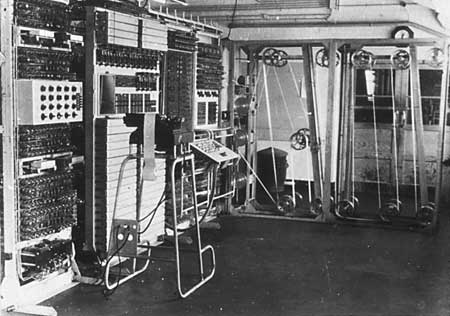
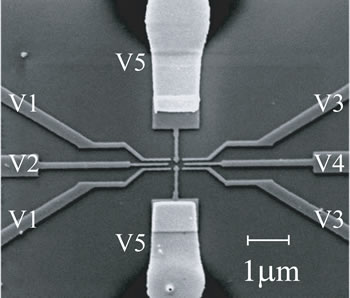
The Germans developed high-altitude rockets to bomb London. Within a couple of decades, the same technology would put people on the moon. The Americans developed atomic bombs that were used to flatten Japanese cities in a single strike. Within a couple of decades, those bombs had become powerful enough to wipe out humanity many times over, in less time than it takes to make breakfast. Then there were the computers. You know about Enigma machines. They played a significant role in wartime cryptography. But the allies built bigger, faster machines to crack the Enigma messages (the Enigma cipher was first broken, not by the US in the 1940s as our history textbooks triumphantly suggest, but rather by a group of Polish mathematicians in December, 1932). Those machines filled entire rooms and drank enough power to light up an office block. But they became smaller and faster: much smaller and much faster. They shrank down to the point where you could barely see them. Valves became transistors, transistors became integrated circuits, integrated circuits became microprocessors and microprocessors became quantum optic processors . . . and still it snowballed. Within a few decades, there was no aspect of living that hadn't been touched by computers. They were everywhere, so ubiquitous that you almost didn't notice them any more. They were in our homes, in our animals, in our money, even in our bodies. And even that was just the beginning. Because by the beginning of the 21st century, some people were not content with just having very small machines that could process a lot of data very quickly. They wanted very small machines that could process matter itself: move it around, organize and reorganize it on a microscopic scale. It was eventually proposed that these nanomachines could fix the climate: "Smart Weather" they called it.
"Big Dumb Idea" might be a better name for it. It is going to solve all our problems. Weather we could turn on and off, weather we could boss around. Proposals to seed the oceans and the upper atmosphere with tiny floating machines: invisible to the eye, "harmless" to people. Unthinkable numbers of them that are self-replicating.
Unthinkable numbers of self-replicating machines dumped into the atmosphere and oceans, supposedly under our control.
Need I say more? I think our imaginary friend from a different timeline might think all this a big dumb idea: so why not those who propose this nonsense? If it's not a nuclear holocaust from aggression, it might well be a nanomachine holocaust from compassion: either way not much left to leave to our children.
Even a nano-Bible? I mean really:


Subscribe to:
Posts (Atom)


 Posts
Posts