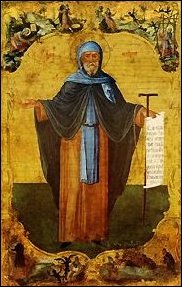
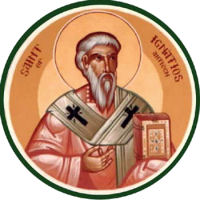
Where human pride seeks not the glory of God, but its own greater satisfaction: wherefore the struggle between man and God obtains.
Showing posts with label faith. Show all posts
Showing posts with label faith. Show all posts
Friday, January 1, 2010
A Bold Return To The Unique
Where could one expect, a priori, a more intensive dialogue throughout history than one between the "old" and the "new" Covenant? Real dialogue takes place where the issues are difficult and the results neither simple nor easy.
Pure, unmediated faith: this alone is life.
Sunday, October 12, 2008
Faith
Newman and Polanyi:
The faith that can be put into words is not the real faith. At the core of the act of faith is a personal encounter between God and the believer. Newman held that there were two luminous beings in our experience, the self and God. But the very fullness of direct apprehension of the self and God mocks all of our efforts to capture self or God in words. Even in the act of speaking as best we can, we know that the self that can be put into words is not the real self and the God that can be put into words is not the real God. No set of propositions can fully disclose who I am. Even as I try to tell a few truths about myself, my mind surveys other aspects of my interior life that run deep into the tacit dimension. When the words run out, I remain—a mystery even to myself, luminous, real, incommunicable, a small image of the inexhaustible mystery of God. In both cases, the material that resists abstraction and that cannot be communicated in words is not a negligible residue, devoid of intellectual meaning, but is instead the heart of the whole matter and the point of every proposition.
The faith that can be put into words is not the real faith. At the core of the act of faith is a personal encounter between God and the believer. Newman held that there were two luminous beings in our experience, the self and God. But the very fullness of direct apprehension of the self and God mocks all of our efforts to capture self or God in words. Even in the act of speaking as best we can, we know that the self that can be put into words is not the real self and the God that can be put into words is not the real God. No set of propositions can fully disclose who I am. Even as I try to tell a few truths about myself, my mind surveys other aspects of my interior life that run deep into the tacit dimension. When the words run out, I remain—a mystery even to myself, luminous, real, incommunicable, a small image of the inexhaustible mystery of God. In both cases, the material that resists abstraction and that cannot be communicated in words is not a negligible residue, devoid of intellectual meaning, but is instead the heart of the whole matter and the point of every proposition.
Sunday, January 20, 2008

Thursday, December 6, 2007
The Business of Souls: When Experts Attack
Here’s what I can’t figure out: How in the world did Saint Patrick evangelize all of those Druid priests and clan chieftains without a mission statement? After all, history and tradition tell us that he walked around preaching and performed an occasional miracle. But how did he know what his mission was?
And then, there are purpose and strategy and vision—all three of which cannot be left to chance, if today’s business and Church-growth experts are right. (“Christ before me, Christ behind me”—what does that mean, practically speaking?) If you want to be effective, if you want to achieve success, if you want your enterprise to grow, you have to be on top of these things, or else you will simply stand still. And, as we all know, there is no such thing as “standing still”: If you’re not moving forward, you’re falling backward.
A leader moves forward and induces others to follow him into the future. He does this by casting a vision—by explaining, concisely and concretely, where the organization is heading. (If you aim at nothing, you’ll hit it every time!) This vision helps to define the mission, which must also be articulated and repeated, mantra-like, in order to give followers a sense of identity and purpose. Imagine what Patrick’s success would have been, had he and his merry band recited, as the road rose up to meet them, “Bog Ulster Ministries (BUM) is a loving, caring family that earnestly desires to help tree-worshiping spiritual seekers become transformed believers who model Purpose Driven lives.”
What, exactly, drew the Irish to Patrick? Was it the thrilling promise of a miracle? Did Patrick pass out vellums advertising a Three Night Life-Changing Crusade? “Watch Snakes Vanish, Before Your Very Eyes!” Did he carefully compose relevant, contemporary music (so as not to frighten away the hipster Celts) for singing “The Breastplate”? “Ooh, ooh, ooh, the splendour of fire! / Whoa, oh, oh, the flashing of light’ning! [Repeat 6x’s.]” Did he speak to their felt needs, urging them to trade in all of their cares, their anxieties, and their depression for a relationship with Christ?
And how did he ensure that those he persuaded to make Life-Changing Decisions would keep coming to church? Did he create special ministries for Celtic youth, for young Irish families, for the Mothers of Preschoolers? “Today, after Mass, Pastor Pat will be talking with the Nifty Fifties about living with osteoporosis.” Or “Irish Youth In Service (IRIS) will be having its annual God-Hain bonfire this Saturday night. (Parents, please: No devil masks.)”
No, Patrick preached. He evangelized (“gospelled”) as he went, wherever he went. He did not have a mission statement: He had the Great Commission. He did not have marketing techniques: He had the Holy Ghost, the Word of God, and his ordination. He did not have slick music or a “relevant message”: He had the Body and Blood of Christ, the stern rebuke of God’s Law, and the promise of the forgiveness of sins.
That is all very high-sounding and wonderful, but the fact remains that we do not live in the same world that Saint Patrick (or Gregory the Great or Thomas Aquinas or take your pick) inhabited. The past century has witnessed the complete transformation of Western society: the destruction of communities, cities, farms and the small towns they supported, small businesses, jobs in general, the social order, etc. What is left of public Christian morality is quickly vanishing; divorce is universally accepted; contraception, abortion, and sodomy are rights by default; and those who argue against them are immediately branded as sinister “phobes” of some sort who wish to impose their own morality on, and enslave, others. In this era of MySpace and e-mail and cell phones, the old method of walking around and talking to people, sharing the Faith as one goes, inviting unbelieving friends to church, and even impromptu preaching seems impossible, outdated, even insincere. Every seminarian knows that modernity brought specialization, which brought isolation, which brought alienation. Modernism has made us all naked individuals, and postmodernism has made everything relative. No matter what ism we slap on the problem, however, many of us arrive (enthusiastically or reluctantly) at a similar conclusion: Since the world has changed, the Church must change; we must adapt, or die. And the fact that our churches are dying means that we must not be adapting enough.
Few of today’s Church-growth experts would call the Gospel a product, but that is, in essence, how it is treated. And, as one great business guru said, half a century ago, “There is only one valid definition of business purpose: to create a customer.” Unbelievers are treated as customers, consumers, “seekers” with identifiable needs. Thus, many American churches have adapted themselves, in varying degrees, to a business model. The extent of this adaptation is significant: How many churches today have mission/vision/purpose/strategy statements? How many of them have added a “contemporary” service, or transformed their “traditional” service by including various modern trappings (video projectors, “praise bands,” psycho-babble sermons, a general air of informality)? How many of them anguish over advertising campaigns designed to bring in more people on any given Sunday?
Rick Warren, author of The Purpose Driven Church and pastor of one of the largest megachurches in America, Saddleback Church of Lake Forest, California, is the guru of the hour when it comes to Church growth. Because of his success, he is a highly-sought-after consultant, speaking to assemblies of clergy on the principles of effective leadership and sustainable growth. And, given the fact that so much hangs in the balance, when it comes to the business of souls—Heaven and Hell, life everlasting—shouldn’t we listen to the experts, to those who are sowing more seed for the Great Harvest? And shouldn’t Warren, blessed with success and the knowledge that brought it to him, be eager to share it with others, to the glory of God?
Perhaps we should say “to the glory of G-d.” For Warren does not limit his consulting to evangelicals, Protestants, or even trinitarians. In June 2005, he addressed Synagogue 3000, an alliance of Jewish rabbis in Orange County who want in on the success that Warren has achieved. Synagogue 3000’s desire to help Jews “to be center stage active players instead of disengaged spectators” led them to contact Warren for a “pathbreaking” meeting. Of course, a good portion of Warren’s shtick (the need to use creative methods to attract today’s young people and to do away with boring old traditions that drive them away) is nothing new for evangelicals—or the Jews of Synagogue 3000, for that matter. (In their literature, they cite examples of Jewish leaders who are already combining “traditional beliefs with personally meaningful practices,” including a “young female rabbi” at the Mid-Wilshire Ikar Synagogue who is “attracting crowds of next generation hipsters to Yom Kippur yoga and disco breakfast.”)
What was unique about Warren’s long series of presentations to Synagogue 3000 was his emphasis on relationship-driven, goal-oriented, decentralized leadership. “We are in an increasingly fragmented and lonely world,” he told the rabbis, because “Americans have taken individualism to such an excess.” A successful, growing “ministry” will not attract and keep new people through gimmicks: The real attraction is a “sense of community”—the opportunity to be not just a believer but a “belonger.” To create this sense, Warren insists that leaders refuse to dictate new teachings from on high: “You need an Aaron,” a spokesman in each age and socioeconomic group, who will tell his fellows, “You know what, she’s right, [or] he’s right.” These “Aarons” can, in turn, serve as the heads of small groups—little conventicles where believers become belongers, and where the lead leader’s vision is recast.
Warren understands that the individual needs a sense of parameters in order to belong, a clear definition of what makes an “outsider” and an “insider,” which means knowing that “we believe this is right, and this is wrong.” Therefore, “You need to decide what the parameters are in your particular congregation, and stick with them.” This is important, because, as the “sociology” data have proved, “congregations that grow have clearly defined parameters . . . whether they’re right or not.”
Warren, trained as a Southern Baptist pastor, did not come up with these ideas on his own. He, too, had a leader: the late Peter F. Drucker, who, in his obit in the Washington Post (November 12, 2005), was described as “the world’s most influential business guru.” The author of numerous books, Drucker is credited with single-handedly transforming corporate America by redefining the role of management and exchanging the “command and control” model for a decentralized small-group approach befitting the “corporation as social institution.” For 20 years, Warren sat at Drucker’s feet, in extensive private meetings at least twice per year, in which Drucker helped Warren to reconceive the local church according to his own relationship-oriented business model. So close was their relationship that, in late 2004, Warren was able to coax Drucker into granting Forbes a rare interview (Drucker had retired from the public spotlight because of his declining health), in which he said that “Leaders communicate in the sense that people around them know what they are trying to do. They are purpose driven—yes, mission driven.” Indeed, Drucker’s business-school concepts—“management objectives,” “knowledge workers”—were baptized by Warren and became the essence of his approach to ministry, so much so that Warren became chief among Drucker’s disciples. As Warren told a meeting of the Pew Forum in May 2005,
The hubris that inspires Rick Warren’s approach to ministry is not unique to him; it is a manifestation of the heresy Pope Leo XIII called Americanism over a century ago. The cockeyed optimism that gives birth to this heresy is the uniquely American perspective that we are the terminal generation, that we are special on the stage of world history, that everything must conform to our vision of ourselves. This hubris makes it easy for us to conclude, as Leo suggests, that today, “the Holy Spirit pours richer and more abundant graces than formerly upon the souls of the faithful, so that without human intervention He teaches and guides them by some hidden instinct of His own.” Our problems are so great that, unlike the saints of old, we require the wisdom of Rick Warren or Peter Drucker—wisdom derived not from Sacred Scripture, the Church Fathers, or tradition (even our own Protestant traditions) but from some inner voice called “God”—if souls are to be saved. It is the Americanism embedded in our souls that causes us to wonder whether plain old preaching, whether old-fashioned evangelism, backed up by lives of obedience to Our Lord’s commandments, is enough.
Against this heresy, Saint Patrick’s ministry is a witness. For he sowed his seed in the face of danger, against all odds, and in ground recently polluted by Pelagianism, another heresy that exalts the will of the individual at the expense of divine grace. Thus, Leo’s question reveals our hubris and alleviates our fear that we must “adapt or die”: “[S]hall any one who recalls the history of the apostles, the faith of the nascent church, the trials and deaths of the martyrs—and, above all, those olden times, so fruitful in saints—dare to measure our age with these, or affirm that they received less of the divine outpouring from the Spirit of Holiness?”
And then, there are purpose and strategy and vision—all three of which cannot be left to chance, if today’s business and Church-growth experts are right. (“Christ before me, Christ behind me”—what does that mean, practically speaking?) If you want to be effective, if you want to achieve success, if you want your enterprise to grow, you have to be on top of these things, or else you will simply stand still. And, as we all know, there is no such thing as “standing still”: If you’re not moving forward, you’re falling backward.
A leader moves forward and induces others to follow him into the future. He does this by casting a vision—by explaining, concisely and concretely, where the organization is heading. (If you aim at nothing, you’ll hit it every time!) This vision helps to define the mission, which must also be articulated and repeated, mantra-like, in order to give followers a sense of identity and purpose. Imagine what Patrick’s success would have been, had he and his merry band recited, as the road rose up to meet them, “Bog Ulster Ministries (BUM) is a loving, caring family that earnestly desires to help tree-worshiping spiritual seekers become transformed believers who model Purpose Driven lives.”
What, exactly, drew the Irish to Patrick? Was it the thrilling promise of a miracle? Did Patrick pass out vellums advertising a Three Night Life-Changing Crusade? “Watch Snakes Vanish, Before Your Very Eyes!” Did he carefully compose relevant, contemporary music (so as not to frighten away the hipster Celts) for singing “The Breastplate”? “Ooh, ooh, ooh, the splendour of fire! / Whoa, oh, oh, the flashing of light’ning! [Repeat 6x’s.]” Did he speak to their felt needs, urging them to trade in all of their cares, their anxieties, and their depression for a relationship with Christ?
And how did he ensure that those he persuaded to make Life-Changing Decisions would keep coming to church? Did he create special ministries for Celtic youth, for young Irish families, for the Mothers of Preschoolers? “Today, after Mass, Pastor Pat will be talking with the Nifty Fifties about living with osteoporosis.” Or “Irish Youth In Service (IRIS) will be having its annual God-Hain bonfire this Saturday night. (Parents, please: No devil masks.)”
No, Patrick preached. He evangelized (“gospelled”) as he went, wherever he went. He did not have a mission statement: He had the Great Commission. He did not have marketing techniques: He had the Holy Ghost, the Word of God, and his ordination. He did not have slick music or a “relevant message”: He had the Body and Blood of Christ, the stern rebuke of God’s Law, and the promise of the forgiveness of sins.
That is all very high-sounding and wonderful, but the fact remains that we do not live in the same world that Saint Patrick (or Gregory the Great or Thomas Aquinas or take your pick) inhabited. The past century has witnessed the complete transformation of Western society: the destruction of communities, cities, farms and the small towns they supported, small businesses, jobs in general, the social order, etc. What is left of public Christian morality is quickly vanishing; divorce is universally accepted; contraception, abortion, and sodomy are rights by default; and those who argue against them are immediately branded as sinister “phobes” of some sort who wish to impose their own morality on, and enslave, others. In this era of MySpace and e-mail and cell phones, the old method of walking around and talking to people, sharing the Faith as one goes, inviting unbelieving friends to church, and even impromptu preaching seems impossible, outdated, even insincere. Every seminarian knows that modernity brought specialization, which brought isolation, which brought alienation. Modernism has made us all naked individuals, and postmodernism has made everything relative. No matter what ism we slap on the problem, however, many of us arrive (enthusiastically or reluctantly) at a similar conclusion: Since the world has changed, the Church must change; we must adapt, or die. And the fact that our churches are dying means that we must not be adapting enough.
Few of today’s Church-growth experts would call the Gospel a product, but that is, in essence, how it is treated. And, as one great business guru said, half a century ago, “There is only one valid definition of business purpose: to create a customer.” Unbelievers are treated as customers, consumers, “seekers” with identifiable needs. Thus, many American churches have adapted themselves, in varying degrees, to a business model. The extent of this adaptation is significant: How many churches today have mission/vision/purpose/strategy statements? How many of them have added a “contemporary” service, or transformed their “traditional” service by including various modern trappings (video projectors, “praise bands,” psycho-babble sermons, a general air of informality)? How many of them anguish over advertising campaigns designed to bring in more people on any given Sunday?
Rick Warren, author of The Purpose Driven Church and pastor of one of the largest megachurches in America, Saddleback Church of Lake Forest, California, is the guru of the hour when it comes to Church growth. Because of his success, he is a highly-sought-after consultant, speaking to assemblies of clergy on the principles of effective leadership and sustainable growth. And, given the fact that so much hangs in the balance, when it comes to the business of souls—Heaven and Hell, life everlasting—shouldn’t we listen to the experts, to those who are sowing more seed for the Great Harvest? And shouldn’t Warren, blessed with success and the knowledge that brought it to him, be eager to share it with others, to the glory of God?
Perhaps we should say “to the glory of G-d.” For Warren does not limit his consulting to evangelicals, Protestants, or even trinitarians. In June 2005, he addressed Synagogue 3000, an alliance of Jewish rabbis in Orange County who want in on the success that Warren has achieved. Synagogue 3000’s desire to help Jews “to be center stage active players instead of disengaged spectators” led them to contact Warren for a “pathbreaking” meeting. Of course, a good portion of Warren’s shtick (the need to use creative methods to attract today’s young people and to do away with boring old traditions that drive them away) is nothing new for evangelicals—or the Jews of Synagogue 3000, for that matter. (In their literature, they cite examples of Jewish leaders who are already combining “traditional beliefs with personally meaningful practices,” including a “young female rabbi” at the Mid-Wilshire Ikar Synagogue who is “attracting crowds of next generation hipsters to Yom Kippur yoga and disco breakfast.”)
What was unique about Warren’s long series of presentations to Synagogue 3000 was his emphasis on relationship-driven, goal-oriented, decentralized leadership. “We are in an increasingly fragmented and lonely world,” he told the rabbis, because “Americans have taken individualism to such an excess.” A successful, growing “ministry” will not attract and keep new people through gimmicks: The real attraction is a “sense of community”—the opportunity to be not just a believer but a “belonger.” To create this sense, Warren insists that leaders refuse to dictate new teachings from on high: “You need an Aaron,” a spokesman in each age and socioeconomic group, who will tell his fellows, “You know what, she’s right, [or] he’s right.” These “Aarons” can, in turn, serve as the heads of small groups—little conventicles where believers become belongers, and where the lead leader’s vision is recast.
Warren understands that the individual needs a sense of parameters in order to belong, a clear definition of what makes an “outsider” and an “insider,” which means knowing that “we believe this is right, and this is wrong.” Therefore, “You need to decide what the parameters are in your particular congregation, and stick with them.” This is important, because, as the “sociology” data have proved, “congregations that grow have clearly defined parameters . . . whether they’re right or not.”
Warren, trained as a Southern Baptist pastor, did not come up with these ideas on his own. He, too, had a leader: the late Peter F. Drucker, who, in his obit in the Washington Post (November 12, 2005), was described as “the world’s most influential business guru.” The author of numerous books, Drucker is credited with single-handedly transforming corporate America by redefining the role of management and exchanging the “command and control” model for a decentralized small-group approach befitting the “corporation as social institution.” For 20 years, Warren sat at Drucker’s feet, in extensive private meetings at least twice per year, in which Drucker helped Warren to reconceive the local church according to his own relationship-oriented business model. So close was their relationship that, in late 2004, Warren was able to coax Drucker into granting Forbes a rare interview (Drucker had retired from the public spotlight because of his declining health), in which he said that “Leaders communicate in the sense that people around them know what they are trying to do. They are purpose driven—yes, mission driven.” Indeed, Drucker’s business-school concepts—“management objectives,” “knowledge workers”—were baptized by Warren and became the essence of his approach to ministry, so much so that Warren became chief among Drucker’s disciples. As Warren told a meeting of the Pew Forum in May 2005,
I spoke at Harvard last month. I did a series of lectures for the faculty in the Kennedy School and also in the law school. I spoke to several groups of faculty and several groups of students and I started with this quote from Peter Drucker: “The most significant sociological phenomenon of the first half of the 20th century was the rise of the corporation. The most significant sociological phenomenon of the second half of the 20th century has been the development of the large pastoral church—of the mega-church. It is the only organization that is actually working in our society.”It is truly breathtaking that, with all of the degradation that modernity has brought to American society, a man would be so bold as to claim that, by embracing that degradation—consumerism, corporatism, individualism—he has helped to make the Church “workable” in that same society. It is remarkable that he would find his method of evangelization applicable to those who deny the divinity of the One Whose Name he bears. And it is incredible that he freely admits that, in order to achieve success, not only must leaders “define their own parameters of faith,” but the “truthiness” of said parameters is irrelevant to the potential for ministerial “success.”
The hubris that inspires Rick Warren’s approach to ministry is not unique to him; it is a manifestation of the heresy Pope Leo XIII called Americanism over a century ago. The cockeyed optimism that gives birth to this heresy is the uniquely American perspective that we are the terminal generation, that we are special on the stage of world history, that everything must conform to our vision of ourselves. This hubris makes it easy for us to conclude, as Leo suggests, that today, “the Holy Spirit pours richer and more abundant graces than formerly upon the souls of the faithful, so that without human intervention He teaches and guides them by some hidden instinct of His own.” Our problems are so great that, unlike the saints of old, we require the wisdom of Rick Warren or Peter Drucker—wisdom derived not from Sacred Scripture, the Church Fathers, or tradition (even our own Protestant traditions) but from some inner voice called “God”—if souls are to be saved. It is the Americanism embedded in our souls that causes us to wonder whether plain old preaching, whether old-fashioned evangelism, backed up by lives of obedience to Our Lord’s commandments, is enough.
Against this heresy, Saint Patrick’s ministry is a witness. For he sowed his seed in the face of danger, against all odds, and in ground recently polluted by Pelagianism, another heresy that exalts the will of the individual at the expense of divine grace. Thus, Leo’s question reveals our hubris and alleviates our fear that we must “adapt or die”: “[S]hall any one who recalls the history of the apostles, the faith of the nascent church, the trials and deaths of the martyrs—and, above all, those olden times, so fruitful in saints—dare to measure our age with these, or affirm that they received less of the divine outpouring from the Spirit of Holiness?”
- Aaron D. Wolf
Southern Faith, Northern Unitarianism
An interesting article by Michael C. Tuggle; it could probably be retitled, "Against Cultural Homogenization":
There is a big difference between the historical and present-day mindsets of the North and the South, and it is my belief that these conflicting mindsets contributed to the conflicts between the two regions that ultimately led to the War for Southern Independence. We are still referred to as “the Bible Belt,” and are still attacked for our traditional beliefs. The continuing North-South split was made very evident in the last presidential election between Democrat and Republican as graphically illustrated in the Red zones in the South, and the Blue Zones in the North, as the various news media pointed out continually in their coverage of the election. Therefore, in the 2000 presidential election, we see that the historical political differences between the two regions still persist and are still very significant.
Carl Schmitt, one of the great political philosophers of the 20th century, once wrote that “all significant concepts of the modern theory of the state are secularized theological concepts.” In other words, politics is based on religion. And I would agree with him. Religion is that great explanation of life and the meaning of life that draws people together to work for a common goal. The root word for religion is the Latin term for “that which ties or binds together.” But just as all modern philosophy is based on religious belief, so is modern political ideology. What we want to examine today are the religious foundations of the differing political and social philosophies that continue to distinguish North and South.
In my opinion, the single best short description of the political and social differences between North and South was made in the movie “Ride with the Devil,” which was directed by Ang Lee, and starred Tobey Maguire, whom you probably recognize better as Spiderman.
“Ride with the Devil” is a powerful, visually striking movie that tells the story of the guerilla war in Missouri during the War for Southern Independence. In the scene I’d like to describe, Tobey Maguire’s character, a Southern guerilla fighter, takes an evening away from the bitter fighting to stay in the home of a Southern sympathizer named Evans. Evans pours drinks for his two guests, who are extremely appreciative of Evans’ hospitality. Despite their attempts to avoid the subject, they start talking about how the fighting is going.
Evans asks his guests if they’ve ever been to Lawrence, Kansas. They reply that they have not, and Evans nods very thoughtfully. He finally says that he’d figured they had not seen this Yankee outpost in the mid-West. Evans tells them what he’d seen in the town while it was under construction:
“As I watched those Northerners building that town, I witnessed the seeds of our own destruction being sown. I’m not speaking of abolitionist trouble-making, or even the number of Northerners. It was the school. Before they built the church, they built that schoolhouse. Then they brought in every farmers’ son and every farmers’ daughter and made sure they would think and live the same free-thinking way they do, without regard to station, or stature, or custom, or propriety. That’s when I realized that the Yankees will surely win, because they believe everyone must live and think just like them. We don’t want to make everyone be like us. We shall surely lose because we don’t care how other people live-we just take care of ourselves.”
Now of course, when Evans refers to “we,” when he says that “we don’t want to make everyone be like us,” he means Southerners. And what he says is quite true--Southerners do tend to mind their own business and to let things be. Northerners, on the other hand, as a culture, not only tend to remake things to suit them better, but also tend to impose their way of doing things on others. As Admiral Raphael Semmes of the CSS Alabama once put it, "The Yankee is compelled to toil to make the world go around." So, what is it about the Northern mindset that made them that way, and makes them that way today? And what is it about Southerners that makes us the way we are?
These differing tendencies between the two cultures created much of the conflict which led to the horrendous bloodshed of 1861-1865, and the argument I would like to make today is that these tendencies are based on fundamentally different religious attitudes between the North and the South, which I would like to explore, and hopefully clarify.
The existing social, cultural, and political climate of the Northeastern United States was established by the British colonization there. One of the best summaries of the colonial period and its impact was the book, Albion’s Seed: Four British Folkways in America, by Brandeis University historian David Hackett Fisher. As documented in this book, the “cultural hearth” of New England was created by the immigration of 21,000 East Anglian Puritans to Massachusetts in the period of 1629 through 1641. The South, on the other hand, was a “Puritan-free” zone.
While many in the South shared Calvinist roots with the Puritans of New England, they did not share the unique intellectual and theological journey that distinguished the Puritans. And that is one of the puzzling questions we want to explore today--with similar Christian roots, even to the point of a shared degree of Calvinism, why did the North and South diverge in such radically different directions?
Let’s start with a brief look at the Southern religion and its political implications. It would be too easy to say that Southerners remain true to Christianity while Northerners have substituted liberal social activism for Biblical faith. It would be true, but really doesn’t explain very much. Our understanding of Northern religious and political temperament is enhanced when we compare them to Southern attitudes. Southern religion, and therefore the entire Southern worldview, appreciates the richness of both the physical and the spiritual. We believe that both belong to God. Therefore, unlike the Puritan, we do not believe that “things” are inherently evil. Tobacco, food, alcohol, guns, you name it--are not evil in and of themselves. Evil people can abuse these things, but Southerners know that these things can be not only useful, but enjoyable.
Southerners, as a whole, do not believe that things are evil. We appreciate nature, and tend to the agrarian belief that nature is to be both enjoyed and preserved. We accept the world as it is given to us, and believe it is our duty to find our place in it and accept our responsibilities. As stated in the original introduction of I’ll Take My Stand in 1929: “Religion can hardly expect to flourish in an industrial society. Religion is our submission to the general intention of a nature that is fairly inscrutable; it is the sense of our role as creatures within it.” Anne C. Loveland, in her book Southern Evangelicals and the Social Order, 1800-1860 wrote that Southerners are “as dubious of human ability in social and political matters as in the matter of salvation. The belief in the sovereignty of God and dependence of man was the whole of their thinking.” Here is how Richard Weaver described the Southern spiritual tradition: “Piety comes to us as a warning voice that we must think as mortals, that it is not for us either to know all or to control all. It is a recognition of our own limitations and a cheerful acceptance of the contingency of nature, which gives us the protective virtue of humility.”
A useful way to think about the difference between the Northern and Southern religions comes from Southern theologian A.J. Conyers in his book, The Long Truce. In this study on the history and political use of tolerance, Conyers discusses the two extremes that Christianity has long contended with. The Puritans, who settled Massachusetts Bay Colony, tended toward Gnosticism, the belief that salvation comes from knowledge. Quoting from Conyers:
“At the other extreme we find Pelagianism, which relies on the goodness of creation and fails to take seriously the extraordinary intervention of God in redemption. So the extremes that Christianity has always struggled against is that of ‘all creation and no redemption’ (Pelagianism), versus ‘all redemption and no creation’ (gnosticism).”
We could say that gnostics accept the Word and reject the World, while Pelagians accept the World and reject the Word. I would argue that what distinguishes Southern religion is a healthy balance between the two. Southern religion, and therefore the entire Southern worldview, appreciates the richness of both the physical and the spiritual, of both the body and the mind. We believe that both belong to God. For Southerners, both the Word and the World are God’s gift to us. This belief is grounded in the simple fact of the Incarnation, when the Word was made flesh, and dwelt among us. Another way of saying the same thing is that Southerners believe in the Trinity, and everything it symbolizes, including the religious and philosophical reality of both separateness and relatedness. We Southerners do not demand that everyone be like us, as Evans pointed out in "Ride with the Devil." Yankees, who inherited the Puritan legacy, believe that only unity has philosophical significance. You’ve heard this attitude expressed recently in the words, “You’re either with us or against us.“ Southerners, on the other hand, believe that God encompasses unity as well as separateness. We believe that unity consists of individual things sharing their relatedness, instead of total absorption. We believe that the individual has its own purpose and its own reality. Deuteronomy 32:8 says "When the Most High gave the nations their inheritance, when He separated the sons of man, He set the boundaries of the peoples..." In other words, individual things should not be made indistinguishable within some greater entity. We Southerners appreciate true diversity, not the phony diversity of the multi-culturalists who actually want to destroy true distinctions. We celebrate both the individual and the community, and do not believe that the individual must be absorbed by the community, but remain a distinct contributor to the richness of the community.
Now, let’s take a look at the Puritans, and what made them different from Calvinists in the South.
The Puritans were members of the Church of England who wanted to purify the Church of non-Biblical elements. They wanted to eliminate all the practices that they viewed as holdovers from the Catholic church, which the Puritans referred to as "popery", including the ritual robes of the priests, the various ceremonies practiced, and the overall focus and purpose of the Church. They rejected the traditional aspects of worship that did not conform to the Bible, and therefore made the Bible the exclusive reference point of their religious practices. As mentioned previously, they adopted Calvin’s teachings, and aggressively promoted them as a counterpoint to the holdovers from Catholicism that they believed still corrupted the English Church.
The Puritans not only made their reading of the Bible central to their religious practices. They went so far as to make the Bible and their understanding of it as the exclusive authority for all religious questions. And that is my argument about the Puritans, that their first mistake was to put their understanding of the Bible above everything else. They intellectualized religion to the point of excluding all tradition and custom. As a matter of fact, the Puritans came to see religion as exclusively within the realm of the mind. Education came to be the key to salvation, and this of course established and legitimized the Puritan belief that lack of formal education equated to sinfulness. Here, for example, is the opinion of one Puritan leader, Thomas Hooker, in his treatise, The Application of Redemption, "Its with an ignorant sinner in the midst of all means as with a sick man remaining in the Apothecaries shop, ful of choicest Medicines in the darkest night: ...because he cannot see what he takes, and how to use them, he may kill himself or encrease his distempers, but never cure any disease." What Thomas Hooker is telling us is that religion is a serious profession, one that requires professional training. What he’s saying is that he and his fellow Puritans are the professionals when it comes to knowing the mind of God, and you people should not attempt these things at home. Articles of faith, in the hands of the uneducated, can do more harm than good. And of course, the Puritan view of reason as a guide to the Word of God promotes the idea of an elite that understands the ways of God, which the uneducated can never comprehend. What’s abundantly clear in Hooker’s remarks is that the intellectual elite is the only guide that the corrupt masses have to lead them to salvation. That is a recurring theme throughout Puritan ideology.
Therefore, education, or knowledge, becomes the key to salvation, and not just for the clergy, but for the public at large. In 1635, just five years after the Massachusetts Bay Colony was founded, the first "Free Grammar School" was established in Boston. In 1647, Massachusetts required "that every town of one hundred families or more should provide free common and grammar school instruction." Children aged 6-8 attended "Dame schools" where the teacher, who was usually a widow, taught reading. Four years later, Harvard, the first American College, was established in Cambridge, Massachusetts.
Now here’s where things start to go wrong, at least from the Southern Christian perspective. As the Puritans intellectualized their religion, and sought to purify the Church from all human and worldly corruption, they also sought to purify society of all sin. Again, not a bad idea, but it’s the way they went about this crusade that we’re concerned about. The Puritans, both in England and in New England, began to reject traditional society, just as they had originally rejected the traditional church. The doctrine of “total depravity” meant that everything, even good works and best intentions, are affected by sin. Here is how A. J. Conyers described the Puritan crusade in his book, The Long March:
“Their zeal drove them to criticism of existing orders and institutions, fueling the wish for deliverance from the effects of human depravity. Driven in this direction, they were tempted by the same dualism that Christians of all ages have entertained. It is a kind of Gnostic style of theologizing that finds no good in the created order, in human nature, or in the institutions arising in such a world. For the gnostic--and, for the Puritan---Christianity is altogether a theology of redemption without the inclusion of a theology of creation. “
Puritans stripped away the traditional trappings and formalities of Christianity which had been slowly building throughout the previous 1500 years. The Puritans sought to "purify" the church and their own lives, and they attempted this by rejecting the existing order and re-establishing the Church and society on Biblical principles. And this is where we get the popular idea of Puritanism meaning strictness in daily life, and severe adherence to established doctrine. It was HL Mencken who said that a Puritan was a person whose greatest fear was that somewhere, someone was having a good time. What the Puritans were trying to do was to eliminate the sensual things in life that distracted from the logical understanding of God’s word. That’s why the Puritan colonies passed legislation against gamblers, "tobacco-takers," and "stage-players." Cards and the theater were under all circumstances a waste of precious time, and therefore wholly banned. As another example, music in worship was eliminated in Puritan services because it supposedly created an emotional state of mind which was not conducive to listening to God’s message. Instead, the Puritan emphasized sermons that were serious, well-researched theological arguments. For an example of this, read Jonathan Edwards’ sermon, "Sinners in the Hands of an Angry God” to see just how logical and penetrating Puritan analysis could be.
At this point, we need to backtrack just a moment and take a look at the term “gnosticism” that Professor Conyers used in describing the Puritan worldview. Gnosticism is the doctrine of salvation by knowledge, and it is a religious heresy that pre-dates Christianity. The ancient Gnostics were "people who knew", and their knowledge supposedly made them a superior class of beings. According to the Catholic Encyclopedia, Gnostics teach that the physical is nothing but deteriorated spirit, and the whole universe is a corruption of the Deity. According to this ancient pagan heresy, the ultimate purpose of life is to overcome the physical world and return to the Parent-Spirit. In other words, gnostic belief is a pagan interpretation of the universe that sees the physical as a perversion of the mind-spirit that created everything. Sin, in this view, is acceptance of the deteriorated physical world, and the rejection of the mind-spirit.
Gnosticism appears as a parasite that uses Christian doctrine as the host. Gnostic writers from the early days of Christianity have stolen its terminology, and even acknowledged Jesus as Savior. They claimed to be the only true form of Christianity, which they believe is intended only for the gifted and the elect.
Why is this important? The Puritan doctrine of rejecting creation and recognizing redemption only is a modern-day instance of the ancient pagan practice of gnosticism, the belief that salvation comes from knowledge that belongs to an intellectual elite. This enables us to see that over-emphasis on the intellect eventually led the Puritans to see human reason as sovereign, and eventually superior to received faith and superior to tradition. This basic error led them towards the gnostic attitude and all of its errors. Now I think we’re prepared to ask the question: how did conservative, Bible-believing Calvinists degenerate into liberal Unitarians ?
Here’s what the Unitarian web site tells us:
“Unitarianism as we know it in North America is not a foreign import. In fact, the origins of our faith began with some of the most historic congregations in Puritan New England where each town was required to establish a congregationally independent church that followed Calvinist doctrines. Initially these congregational churches offered no religious choice for their parishioners, but over time the strict doctrines of original sin and predestination began to mellow. Growing out of this inclusive theology was a lasting impetus in both denominations to create a more just society. Both Unitarians and Universalists became active participants in many social justice movements in the nineteenth and twentieth centuries. Unitarian preacher Theodore Parker was a prominent abolitionist, defending fugitive slaves and offering support to American abolitionist John Brown.”
This leaves out quite a few steps in the transition from a logical form of Christianity to secular humanism, but it’s easy to fill in the blanks since we’ve just reviewed the history and theological premises of the Puritans. Since they believed that all existing institutions in the physical world are corrupt, and that an intellectually superior elite should therefore reconstruct society for the better, the temptation naturally arises to assert one’s own power and importance over the world. Instead of working to promote God’s will throughout society, as the Puritans did, the Unitarian works to promote egalitarian ideals throughout society. So, by slightly altering the Puritan scheme of things, you end up with crusading liberals determined to re-make society in their own image.
So, what perverts the Puritan from a Bible-based belief system to a secular one? That, too, comes from a Puritan belief that led to tension between the spiritual and rational aspects of the Puritan world view. It is worth remembering that the Puritan movement comprised many of the new entrepreneurs in both old and New England, and this rising middle class needed a religion that recognized its emerging identity. Add to this the Puritan ideal of God rewarding the industrious with commercial success as a sign of virtue, and it is all too easy to forget that the original mission was to remake society for the greater Glory of God.
The catalyst that provided the last push toward secularism is provided by a political philosopher who has had enormous influence on American political development, or deterioration, depending on how you look at it. Thomas Hobbes was not a Puritan, but he was well aware of their thought and influence in England. Indeed, Hobbes’ Leviathan is an argument for a strong centralized government based on many Puritanical assumptions, and his thought not only altered the direction of New England political developments, but also directly influenced Puritan theology.
Hobbes realized that the Puritans’ rise to power in the Church and in Parliament represented the rising commercial class in England, and he deduced that a justification of the authoritarian government that he believed essential to prevent anarchy had to tie in with this rising commercial class. Hobbes’ achievement was to use the secular implications of Puritan ideology to justify centralized political power. The purpose of surrendering authority to an all-powerful sovereign was to prevent anarchy and protect accumulated wealth. That’s the reward for the emerging commercial class. Here is how Hobbes described human nature, and notice how this supports the Puritan view that natural, unenlightened man is inherently corrupt:
“In such condition, there is no place for industry; because the fruit thereof is uncertain: and consequently no culture of the earth; no navigation, nor use of the commodities that may be imported by sea; no commodious building; no instruments of moving, and removing, such things as require much force; no knowledge of the face of the earth; no account of time; no arts; no letters; no society; and which is worst of all, continual fear, and danger of violent death; and the life of man, solitary, poor, nasty, brutish, and short."
In other words, Hobbes argues that left to his own, corrupt man has no means of organizing. There are no natural bonds between men, there is no basis for community, no natural means of creating order and maintaining the peace that businessmen need. We are so violent, so irrational, and so corrupt that we are incapable of governing ourselves. Our only hope as fallen, sinful creatures is to surrender all power to one sovereign. And we give this allegiance to the Leviathan because we have consented to it in order to gratify our own self-interest. That is the rational thing to do. Now, this appeals to the Puritan for a number of reasons. The sovereign, or, the Leviathan, assumes the role of the unitary mind-spirit that created the universe and offers it salvation from its corrupted nature. More important, the Leviathan, the all-encompassing source of power, protects lives and property, enabling the businessman to thrive.
Much of the Puritan ideology remains in Hobbes’ political theory. Creation, that is, the natural world, is inherently corrupt (“solitary, poor, nasty, brutish, and short”). The only way it can be salvaged is to return it to the control of the ultimate source of reason and order, which is the unitary sovereign, the Leviathan. Hobbes’ modified Puritanism and its legacy into a vehicle for reconstructing the world, but now the motivation to reconstruct was business success rather than the City on the Hill promoting and proclaiming the glory of God. It was an easy conversion because Puritans had long believed that commercial success was a sign from God that one was on the right path of discipline and hard work.
Religion, as we discussed at the beginning of this talk, is that which binds people together. Hobbes made a few adjustments to the Puritan’s beliefs and concocted a new rationale for binding people together. They submit to one sovereign in order to pursue their rational self-interest to enrich themselves. Remember, in Hobbes’ view, there is no natural affection among people, no bonds of loyalty, because men’s lives are naturally “Solitary, poor, nasty, brutish, and short.” Fear and greed, in Hobbes’ political philosophy, are what hold this artificial society together. If you look at Washington DC today, with its open borders policy of mass immigration for cheap labor, an imperialist foreign policy to force open world markets and to hold natural resources, plus the constant threat of terror attacks that only Big Government can save you from, you are looking at Thomas Hobbes’ political legacy.
So, with their over-emphasis on knowledge and the sovereignty of reason, the Puritans rejected the traditional order as impure, as a corrupted version of the ultimate spiritual perfection represented by divine knowledge. Their original goal of reconstructing society continued, but now, instead of reconstructing it for the greater glory of God, the goal was transformed into reconstructing it according to the ideals of human reason. Therefore, by 1838, we hear the open expression of the transformed New England ideal by Ralph Waldo Emerson. Emerson, a former Unitarian minister, acknowledged that his aunt, Mary Moody Emerson, a devout Puritan, exerted the greatest influence on his life. Here is what Emerson said in his 1838 address at the Harvard Divinity School: “Build therefore your own world, a correspondent revolution in things will attend the influx of the spirit. So fast will disagreeable appearances, swine, snakes, pests, madhouses, prisons vanish; they are temporary and shall be no more seen until evil is no more seen. The kingdom of man over nature .. a dominion such as now is beyond the dream of God.”
Could Emerson have been any clearer in expressing the radical difference between the Northern and the Southern worldviews? Southerners see themselves as stewards of God’s creation, and believe that traditional society is the result of God’s patient hand. Where Southerners see mystery and beauty in the world around us, Northerners see chaos and untapped raw materials. More important, Southerners believe that our duty as Christians is to accept the will of God and that our reward will come at Judgment Day. Emerson, however, is saying that traditional society is inherently corrupt, and that the world can be remade as a paradise greater than any promise of heaven.
This helps us understand some of the pronouncements coming from Ted Kennedy, Hillary Clinton, and the like. These people, and their followers, really believe that there is no justice, no order, no value in traditional society. If any good is to be had, it must be imposed from the outside, by force, by the ultimate sovereign, which is Big Government. Tobacco is an evil thing that must be eradicated in order to save people from themselves. As you all know, guns make urban youths commit murders. Guns must be eliminated because ordinary people cannot handle that kind of power. All power is to be surrendered to the Leviathan.
By understanding what happened to the Calvinist Puritans, we can better understand why it is true that "The Yankee is compelled to toil to make the world go around." It’s because of the old Puritan belief that the natural world is evil and corrupt, and that all goodness and order come from the mind-spirit of the universe that only the elite can comprehend. According to this worldview, there is no culture whatsoever in traditional society, no barn dances, no singalongs, no folk art whatsoever until Big Government creates a museum and imports artists from New York to provide cultural uplift to the unwashed masses. And since there are no natural bonds between people, any talk about heritage and kinship as a basis for social order is illogical sentimentality. The only thing people have in common is the shared desire to make money and protect their lives and property. This is how liberal Yankees think. Because of this “fact,“ why shouldn’t we open our borders to all comers? And the thought process is the same even when they call themselves neo-conservatives, which is nothing more than another name for the same perversion. It is important to recognize that internal weaknesses in the original set of core Puritan beliefs made these perversions possible. That’s why it is absolutely vital that we Southerners must appreciate what gives Southern faith its vitality and its uniqueness, and be ready to defend it.
We must defend it because it is the only barrier to the Puritan/Universalist mindset. That mindset, as Evans warned in “Ride With the Devil”, is bound to make everyone conform, and that means the end of freedom.
There is a big difference between the historical and present-day mindsets of the North and the South, and it is my belief that these conflicting mindsets contributed to the conflicts between the two regions that ultimately led to the War for Southern Independence. We are still referred to as “the Bible Belt,” and are still attacked for our traditional beliefs. The continuing North-South split was made very evident in the last presidential election between Democrat and Republican as graphically illustrated in the Red zones in the South, and the Blue Zones in the North, as the various news media pointed out continually in their coverage of the election. Therefore, in the 2000 presidential election, we see that the historical political differences between the two regions still persist and are still very significant.
Carl Schmitt, one of the great political philosophers of the 20th century, once wrote that “all significant concepts of the modern theory of the state are secularized theological concepts.” In other words, politics is based on religion. And I would agree with him. Religion is that great explanation of life and the meaning of life that draws people together to work for a common goal. The root word for religion is the Latin term for “that which ties or binds together.” But just as all modern philosophy is based on religious belief, so is modern political ideology. What we want to examine today are the religious foundations of the differing political and social philosophies that continue to distinguish North and South.
In my opinion, the single best short description of the political and social differences between North and South was made in the movie “Ride with the Devil,” which was directed by Ang Lee, and starred Tobey Maguire, whom you probably recognize better as Spiderman.
“Ride with the Devil” is a powerful, visually striking movie that tells the story of the guerilla war in Missouri during the War for Southern Independence. In the scene I’d like to describe, Tobey Maguire’s character, a Southern guerilla fighter, takes an evening away from the bitter fighting to stay in the home of a Southern sympathizer named Evans. Evans pours drinks for his two guests, who are extremely appreciative of Evans’ hospitality. Despite their attempts to avoid the subject, they start talking about how the fighting is going.
Evans asks his guests if they’ve ever been to Lawrence, Kansas. They reply that they have not, and Evans nods very thoughtfully. He finally says that he’d figured they had not seen this Yankee outpost in the mid-West. Evans tells them what he’d seen in the town while it was under construction:
“As I watched those Northerners building that town, I witnessed the seeds of our own destruction being sown. I’m not speaking of abolitionist trouble-making, or even the number of Northerners. It was the school. Before they built the church, they built that schoolhouse. Then they brought in every farmers’ son and every farmers’ daughter and made sure they would think and live the same free-thinking way they do, without regard to station, or stature, or custom, or propriety. That’s when I realized that the Yankees will surely win, because they believe everyone must live and think just like them. We don’t want to make everyone be like us. We shall surely lose because we don’t care how other people live-we just take care of ourselves.”
Now of course, when Evans refers to “we,” when he says that “we don’t want to make everyone be like us,” he means Southerners. And what he says is quite true--Southerners do tend to mind their own business and to let things be. Northerners, on the other hand, as a culture, not only tend to remake things to suit them better, but also tend to impose their way of doing things on others. As Admiral Raphael Semmes of the CSS Alabama once put it, "The Yankee is compelled to toil to make the world go around." So, what is it about the Northern mindset that made them that way, and makes them that way today? And what is it about Southerners that makes us the way we are?
These differing tendencies between the two cultures created much of the conflict which led to the horrendous bloodshed of 1861-1865, and the argument I would like to make today is that these tendencies are based on fundamentally different religious attitudes between the North and the South, which I would like to explore, and hopefully clarify.
The existing social, cultural, and political climate of the Northeastern United States was established by the British colonization there. One of the best summaries of the colonial period and its impact was the book, Albion’s Seed: Four British Folkways in America, by Brandeis University historian David Hackett Fisher. As documented in this book, the “cultural hearth” of New England was created by the immigration of 21,000 East Anglian Puritans to Massachusetts in the period of 1629 through 1641. The South, on the other hand, was a “Puritan-free” zone.
While many in the South shared Calvinist roots with the Puritans of New England, they did not share the unique intellectual and theological journey that distinguished the Puritans. And that is one of the puzzling questions we want to explore today--with similar Christian roots, even to the point of a shared degree of Calvinism, why did the North and South diverge in such radically different directions?
Let’s start with a brief look at the Southern religion and its political implications. It would be too easy to say that Southerners remain true to Christianity while Northerners have substituted liberal social activism for Biblical faith. It would be true, but really doesn’t explain very much. Our understanding of Northern religious and political temperament is enhanced when we compare them to Southern attitudes. Southern religion, and therefore the entire Southern worldview, appreciates the richness of both the physical and the spiritual. We believe that both belong to God. Therefore, unlike the Puritan, we do not believe that “things” are inherently evil. Tobacco, food, alcohol, guns, you name it--are not evil in and of themselves. Evil people can abuse these things, but Southerners know that these things can be not only useful, but enjoyable.
Southerners, as a whole, do not believe that things are evil. We appreciate nature, and tend to the agrarian belief that nature is to be both enjoyed and preserved. We accept the world as it is given to us, and believe it is our duty to find our place in it and accept our responsibilities. As stated in the original introduction of I’ll Take My Stand in 1929: “Religion can hardly expect to flourish in an industrial society. Religion is our submission to the general intention of a nature that is fairly inscrutable; it is the sense of our role as creatures within it.” Anne C. Loveland, in her book Southern Evangelicals and the Social Order, 1800-1860 wrote that Southerners are “as dubious of human ability in social and political matters as in the matter of salvation. The belief in the sovereignty of God and dependence of man was the whole of their thinking.” Here is how Richard Weaver described the Southern spiritual tradition: “Piety comes to us as a warning voice that we must think as mortals, that it is not for us either to know all or to control all. It is a recognition of our own limitations and a cheerful acceptance of the contingency of nature, which gives us the protective virtue of humility.”
A useful way to think about the difference between the Northern and Southern religions comes from Southern theologian A.J. Conyers in his book, The Long Truce. In this study on the history and political use of tolerance, Conyers discusses the two extremes that Christianity has long contended with. The Puritans, who settled Massachusetts Bay Colony, tended toward Gnosticism, the belief that salvation comes from knowledge. Quoting from Conyers:
“At the other extreme we find Pelagianism, which relies on the goodness of creation and fails to take seriously the extraordinary intervention of God in redemption. So the extremes that Christianity has always struggled against is that of ‘all creation and no redemption’ (Pelagianism), versus ‘all redemption and no creation’ (gnosticism).”
We could say that gnostics accept the Word and reject the World, while Pelagians accept the World and reject the Word. I would argue that what distinguishes Southern religion is a healthy balance between the two. Southern religion, and therefore the entire Southern worldview, appreciates the richness of both the physical and the spiritual, of both the body and the mind. We believe that both belong to God. For Southerners, both the Word and the World are God’s gift to us. This belief is grounded in the simple fact of the Incarnation, when the Word was made flesh, and dwelt among us. Another way of saying the same thing is that Southerners believe in the Trinity, and everything it symbolizes, including the religious and philosophical reality of both separateness and relatedness. We Southerners do not demand that everyone be like us, as Evans pointed out in "Ride with the Devil." Yankees, who inherited the Puritan legacy, believe that only unity has philosophical significance. You’ve heard this attitude expressed recently in the words, “You’re either with us or against us.“ Southerners, on the other hand, believe that God encompasses unity as well as separateness. We believe that unity consists of individual things sharing their relatedness, instead of total absorption. We believe that the individual has its own purpose and its own reality. Deuteronomy 32:8 says "When the Most High gave the nations their inheritance, when He separated the sons of man, He set the boundaries of the peoples..." In other words, individual things should not be made indistinguishable within some greater entity. We Southerners appreciate true diversity, not the phony diversity of the multi-culturalists who actually want to destroy true distinctions. We celebrate both the individual and the community, and do not believe that the individual must be absorbed by the community, but remain a distinct contributor to the richness of the community.
Now, let’s take a look at the Puritans, and what made them different from Calvinists in the South.
The Puritans were members of the Church of England who wanted to purify the Church of non-Biblical elements. They wanted to eliminate all the practices that they viewed as holdovers from the Catholic church, which the Puritans referred to as "popery", including the ritual robes of the priests, the various ceremonies practiced, and the overall focus and purpose of the Church. They rejected the traditional aspects of worship that did not conform to the Bible, and therefore made the Bible the exclusive reference point of their religious practices. As mentioned previously, they adopted Calvin’s teachings, and aggressively promoted them as a counterpoint to the holdovers from Catholicism that they believed still corrupted the English Church.
The Puritans not only made their reading of the Bible central to their religious practices. They went so far as to make the Bible and their understanding of it as the exclusive authority for all religious questions. And that is my argument about the Puritans, that their first mistake was to put their understanding of the Bible above everything else. They intellectualized religion to the point of excluding all tradition and custom. As a matter of fact, the Puritans came to see religion as exclusively within the realm of the mind. Education came to be the key to salvation, and this of course established and legitimized the Puritan belief that lack of formal education equated to sinfulness. Here, for example, is the opinion of one Puritan leader, Thomas Hooker, in his treatise, The Application of Redemption, "Its with an ignorant sinner in the midst of all means as with a sick man remaining in the Apothecaries shop, ful of choicest Medicines in the darkest night: ...because he cannot see what he takes, and how to use them, he may kill himself or encrease his distempers, but never cure any disease." What Thomas Hooker is telling us is that religion is a serious profession, one that requires professional training. What he’s saying is that he and his fellow Puritans are the professionals when it comes to knowing the mind of God, and you people should not attempt these things at home. Articles of faith, in the hands of the uneducated, can do more harm than good. And of course, the Puritan view of reason as a guide to the Word of God promotes the idea of an elite that understands the ways of God, which the uneducated can never comprehend. What’s abundantly clear in Hooker’s remarks is that the intellectual elite is the only guide that the corrupt masses have to lead them to salvation. That is a recurring theme throughout Puritan ideology.
Therefore, education, or knowledge, becomes the key to salvation, and not just for the clergy, but for the public at large. In 1635, just five years after the Massachusetts Bay Colony was founded, the first "Free Grammar School" was established in Boston. In 1647, Massachusetts required "that every town of one hundred families or more should provide free common and grammar school instruction." Children aged 6-8 attended "Dame schools" where the teacher, who was usually a widow, taught reading. Four years later, Harvard, the first American College, was established in Cambridge, Massachusetts.
Now here’s where things start to go wrong, at least from the Southern Christian perspective. As the Puritans intellectualized their religion, and sought to purify the Church from all human and worldly corruption, they also sought to purify society of all sin. Again, not a bad idea, but it’s the way they went about this crusade that we’re concerned about. The Puritans, both in England and in New England, began to reject traditional society, just as they had originally rejected the traditional church. The doctrine of “total depravity” meant that everything, even good works and best intentions, are affected by sin. Here is how A. J. Conyers described the Puritan crusade in his book, The Long March:
“Their zeal drove them to criticism of existing orders and institutions, fueling the wish for deliverance from the effects of human depravity. Driven in this direction, they were tempted by the same dualism that Christians of all ages have entertained. It is a kind of Gnostic style of theologizing that finds no good in the created order, in human nature, or in the institutions arising in such a world. For the gnostic--and, for the Puritan---Christianity is altogether a theology of redemption without the inclusion of a theology of creation. “
Puritans stripped away the traditional trappings and formalities of Christianity which had been slowly building throughout the previous 1500 years. The Puritans sought to "purify" the church and their own lives, and they attempted this by rejecting the existing order and re-establishing the Church and society on Biblical principles. And this is where we get the popular idea of Puritanism meaning strictness in daily life, and severe adherence to established doctrine. It was HL Mencken who said that a Puritan was a person whose greatest fear was that somewhere, someone was having a good time. What the Puritans were trying to do was to eliminate the sensual things in life that distracted from the logical understanding of God’s word. That’s why the Puritan colonies passed legislation against gamblers, "tobacco-takers," and "stage-players." Cards and the theater were under all circumstances a waste of precious time, and therefore wholly banned. As another example, music in worship was eliminated in Puritan services because it supposedly created an emotional state of mind which was not conducive to listening to God’s message. Instead, the Puritan emphasized sermons that were serious, well-researched theological arguments. For an example of this, read Jonathan Edwards’ sermon, "Sinners in the Hands of an Angry God” to see just how logical and penetrating Puritan analysis could be.
At this point, we need to backtrack just a moment and take a look at the term “gnosticism” that Professor Conyers used in describing the Puritan worldview. Gnosticism is the doctrine of salvation by knowledge, and it is a religious heresy that pre-dates Christianity. The ancient Gnostics were "people who knew", and their knowledge supposedly made them a superior class of beings. According to the Catholic Encyclopedia, Gnostics teach that the physical is nothing but deteriorated spirit, and the whole universe is a corruption of the Deity. According to this ancient pagan heresy, the ultimate purpose of life is to overcome the physical world and return to the Parent-Spirit. In other words, gnostic belief is a pagan interpretation of the universe that sees the physical as a perversion of the mind-spirit that created everything. Sin, in this view, is acceptance of the deteriorated physical world, and the rejection of the mind-spirit.
Gnosticism appears as a parasite that uses Christian doctrine as the host. Gnostic writers from the early days of Christianity have stolen its terminology, and even acknowledged Jesus as Savior. They claimed to be the only true form of Christianity, which they believe is intended only for the gifted and the elect.
Why is this important? The Puritan doctrine of rejecting creation and recognizing redemption only is a modern-day instance of the ancient pagan practice of gnosticism, the belief that salvation comes from knowledge that belongs to an intellectual elite. This enables us to see that over-emphasis on the intellect eventually led the Puritans to see human reason as sovereign, and eventually superior to received faith and superior to tradition. This basic error led them towards the gnostic attitude and all of its errors. Now I think we’re prepared to ask the question: how did conservative, Bible-believing Calvinists degenerate into liberal Unitarians ?
Here’s what the Unitarian web site tells us:
“Unitarianism as we know it in North America is not a foreign import. In fact, the origins of our faith began with some of the most historic congregations in Puritan New England where each town was required to establish a congregationally independent church that followed Calvinist doctrines. Initially these congregational churches offered no religious choice for their parishioners, but over time the strict doctrines of original sin and predestination began to mellow. Growing out of this inclusive theology was a lasting impetus in both denominations to create a more just society. Both Unitarians and Universalists became active participants in many social justice movements in the nineteenth and twentieth centuries. Unitarian preacher Theodore Parker was a prominent abolitionist, defending fugitive slaves and offering support to American abolitionist John Brown.”
This leaves out quite a few steps in the transition from a logical form of Christianity to secular humanism, but it’s easy to fill in the blanks since we’ve just reviewed the history and theological premises of the Puritans. Since they believed that all existing institutions in the physical world are corrupt, and that an intellectually superior elite should therefore reconstruct society for the better, the temptation naturally arises to assert one’s own power and importance over the world. Instead of working to promote God’s will throughout society, as the Puritans did, the Unitarian works to promote egalitarian ideals throughout society. So, by slightly altering the Puritan scheme of things, you end up with crusading liberals determined to re-make society in their own image.
So, what perverts the Puritan from a Bible-based belief system to a secular one? That, too, comes from a Puritan belief that led to tension between the spiritual and rational aspects of the Puritan world view. It is worth remembering that the Puritan movement comprised many of the new entrepreneurs in both old and New England, and this rising middle class needed a religion that recognized its emerging identity. Add to this the Puritan ideal of God rewarding the industrious with commercial success as a sign of virtue, and it is all too easy to forget that the original mission was to remake society for the greater Glory of God.
The catalyst that provided the last push toward secularism is provided by a political philosopher who has had enormous influence on American political development, or deterioration, depending on how you look at it. Thomas Hobbes was not a Puritan, but he was well aware of their thought and influence in England. Indeed, Hobbes’ Leviathan is an argument for a strong centralized government based on many Puritanical assumptions, and his thought not only altered the direction of New England political developments, but also directly influenced Puritan theology.
Hobbes realized that the Puritans’ rise to power in the Church and in Parliament represented the rising commercial class in England, and he deduced that a justification of the authoritarian government that he believed essential to prevent anarchy had to tie in with this rising commercial class. Hobbes’ achievement was to use the secular implications of Puritan ideology to justify centralized political power. The purpose of surrendering authority to an all-powerful sovereign was to prevent anarchy and protect accumulated wealth. That’s the reward for the emerging commercial class. Here is how Hobbes described human nature, and notice how this supports the Puritan view that natural, unenlightened man is inherently corrupt:
“In such condition, there is no place for industry; because the fruit thereof is uncertain: and consequently no culture of the earth; no navigation, nor use of the commodities that may be imported by sea; no commodious building; no instruments of moving, and removing, such things as require much force; no knowledge of the face of the earth; no account of time; no arts; no letters; no society; and which is worst of all, continual fear, and danger of violent death; and the life of man, solitary, poor, nasty, brutish, and short."
In other words, Hobbes argues that left to his own, corrupt man has no means of organizing. There are no natural bonds between men, there is no basis for community, no natural means of creating order and maintaining the peace that businessmen need. We are so violent, so irrational, and so corrupt that we are incapable of governing ourselves. Our only hope as fallen, sinful creatures is to surrender all power to one sovereign. And we give this allegiance to the Leviathan because we have consented to it in order to gratify our own self-interest. That is the rational thing to do. Now, this appeals to the Puritan for a number of reasons. The sovereign, or, the Leviathan, assumes the role of the unitary mind-spirit that created the universe and offers it salvation from its corrupted nature. More important, the Leviathan, the all-encompassing source of power, protects lives and property, enabling the businessman to thrive.
Much of the Puritan ideology remains in Hobbes’ political theory. Creation, that is, the natural world, is inherently corrupt (“solitary, poor, nasty, brutish, and short”). The only way it can be salvaged is to return it to the control of the ultimate source of reason and order, which is the unitary sovereign, the Leviathan. Hobbes’ modified Puritanism and its legacy into a vehicle for reconstructing the world, but now the motivation to reconstruct was business success rather than the City on the Hill promoting and proclaiming the glory of God. It was an easy conversion because Puritans had long believed that commercial success was a sign from God that one was on the right path of discipline and hard work.
Religion, as we discussed at the beginning of this talk, is that which binds people together. Hobbes made a few adjustments to the Puritan’s beliefs and concocted a new rationale for binding people together. They submit to one sovereign in order to pursue their rational self-interest to enrich themselves. Remember, in Hobbes’ view, there is no natural affection among people, no bonds of loyalty, because men’s lives are naturally “Solitary, poor, nasty, brutish, and short.” Fear and greed, in Hobbes’ political philosophy, are what hold this artificial society together. If you look at Washington DC today, with its open borders policy of mass immigration for cheap labor, an imperialist foreign policy to force open world markets and to hold natural resources, plus the constant threat of terror attacks that only Big Government can save you from, you are looking at Thomas Hobbes’ political legacy.
So, with their over-emphasis on knowledge and the sovereignty of reason, the Puritans rejected the traditional order as impure, as a corrupted version of the ultimate spiritual perfection represented by divine knowledge. Their original goal of reconstructing society continued, but now, instead of reconstructing it for the greater glory of God, the goal was transformed into reconstructing it according to the ideals of human reason. Therefore, by 1838, we hear the open expression of the transformed New England ideal by Ralph Waldo Emerson. Emerson, a former Unitarian minister, acknowledged that his aunt, Mary Moody Emerson, a devout Puritan, exerted the greatest influence on his life. Here is what Emerson said in his 1838 address at the Harvard Divinity School: “Build therefore your own world, a correspondent revolution in things will attend the influx of the spirit. So fast will disagreeable appearances, swine, snakes, pests, madhouses, prisons vanish; they are temporary and shall be no more seen until evil is no more seen. The kingdom of man over nature .. a dominion such as now is beyond the dream of God.”
Could Emerson have been any clearer in expressing the radical difference between the Northern and the Southern worldviews? Southerners see themselves as stewards of God’s creation, and believe that traditional society is the result of God’s patient hand. Where Southerners see mystery and beauty in the world around us, Northerners see chaos and untapped raw materials. More important, Southerners believe that our duty as Christians is to accept the will of God and that our reward will come at Judgment Day. Emerson, however, is saying that traditional society is inherently corrupt, and that the world can be remade as a paradise greater than any promise of heaven.
This helps us understand some of the pronouncements coming from Ted Kennedy, Hillary Clinton, and the like. These people, and their followers, really believe that there is no justice, no order, no value in traditional society. If any good is to be had, it must be imposed from the outside, by force, by the ultimate sovereign, which is Big Government. Tobacco is an evil thing that must be eradicated in order to save people from themselves. As you all know, guns make urban youths commit murders. Guns must be eliminated because ordinary people cannot handle that kind of power. All power is to be surrendered to the Leviathan.
By understanding what happened to the Calvinist Puritans, we can better understand why it is true that "The Yankee is compelled to toil to make the world go around." It’s because of the old Puritan belief that the natural world is evil and corrupt, and that all goodness and order come from the mind-spirit of the universe that only the elite can comprehend. According to this worldview, there is no culture whatsoever in traditional society, no barn dances, no singalongs, no folk art whatsoever until Big Government creates a museum and imports artists from New York to provide cultural uplift to the unwashed masses. And since there are no natural bonds between people, any talk about heritage and kinship as a basis for social order is illogical sentimentality. The only thing people have in common is the shared desire to make money and protect their lives and property. This is how liberal Yankees think. Because of this “fact,“ why shouldn’t we open our borders to all comers? And the thought process is the same even when they call themselves neo-conservatives, which is nothing more than another name for the same perversion. It is important to recognize that internal weaknesses in the original set of core Puritan beliefs made these perversions possible. That’s why it is absolutely vital that we Southerners must appreciate what gives Southern faith its vitality and its uniqueness, and be ready to defend it.
We must defend it because it is the only barrier to the Puritan/Universalist mindset. That mindset, as Evans warned in “Ride With the Devil”, is bound to make everyone conform, and that means the end of freedom.
Saturday, November 17, 2007
Hw-ay Gai
The below shows the Chinese for repentance, as used in most Bibles (for example “Repent, for the Kingdom of Heaven is at hand.” - Matt 4:17):
 The first character, 悔 (pron. “hui” or “hw-ay”), means to feel sorry; the second, 改 (”gai” as in the English word guy), means to change or correct. Although this is the same as English, in Chinese the meaning of the word is explicit: change and correction through remorse. Perfect.
And there is more. The character hui, 悔, has on the left the character used for the heart (心) emphasising that the remorse felt is something of the heart, just as Biblical writers understood that this is the seat of emotion and intellect. To the right, is the character meaning “every”, or “each”, (e.g. 每天, means “every[每] day[天]”). The remorse we have must be for everything we have done.
Following on from the remorse and regret, crucially, is change (改). Here again are two parts, left and right. To the left we have 已, ji, which means “oneself” or “one’s own”. The right part literally means to “whip” or “tap”, but ultimately has the meaning of change. Our own change, the correction of ourselves.
“Hw-ay Gai” - Remorse leading to correction.
What's the difference between repentance and remorse? It's the difference between Peter and Judas.
- East of Byzantium Blog
Fr. Elias Wen, Ora Pro Nobis:

 -
- 
Thursday, November 15, 2007
Aletheia Baptism
The single most important event of Aletheia's earthly life will occur this Sunday: we will request for her her baptism. We will ask God to grant her her freedom (Catechism of the Catholic Church, CCC 1250).
The basis for all the other sacraments - through which she will become a Christian - it is, as the Catechism puts it, "the foundation of communion among all Christians" (CCC 1271).
The Greek word baptisma originally means submerging. It symbolizes going deep down into one of the primordial elements of creation: water brings life (no water, no life!), it cleanses, and it can be deadly. In baptism all three meanings are brought together: deadly flood - baptism is a participation in the death and burial of Jesus (Rom. 6:3-4; CCC 1227); cleansing - baptism as the washing of regeneration (CCC 1215); life - baptism as a resurrection with Christ to new life (CCC 1214). The mysterious power and efficacy of baptism come from the Cross of Christ: Aletheia will be be baptized "into his death", so that he may implant in her his life (CCC 1225; 1227).
What takes place in baptism is indicated by the rites that precede and follow it: the request, the signing of the cross, the prayers of exorcism, the clothing with the white garment, and the giving of the candle (CCC 1242-43). Christ loved us first (1 Jn. 4:10), and bestows a gift upon us in baptism (a gift for which we must ask), by dying upon the cross and rising again. Aletheia's baptism presupposes, and the prayers of exorcism make manifest, that every human being is in need of baptism, even our newborn, precious child. Because of original sin (CCC 403), no one is "healthy" in himself: health, the health that is salvation is to be found only in Jesus (Acts 4:12). The acts of clothing Aletheia in a white garment and the giving of the candle symbolize that this newly baptized person has "put on Christ" and has now become light against the darknesses of Satan.
Please pray for Aletheia this weekend: a new Christian will be born!
The basis for all the other sacraments - through which she will become a Christian - it is, as the Catechism puts it, "the foundation of communion among all Christians" (CCC 1271).
The Greek word baptisma originally means submerging. It symbolizes going deep down into one of the primordial elements of creation: water brings life (no water, no life!), it cleanses, and it can be deadly. In baptism all three meanings are brought together: deadly flood - baptism is a participation in the death and burial of Jesus (Rom. 6:3-4; CCC 1227); cleansing - baptism as the washing of regeneration (CCC 1215); life - baptism as a resurrection with Christ to new life (CCC 1214). The mysterious power and efficacy of baptism come from the Cross of Christ: Aletheia will be be baptized "into his death", so that he may implant in her his life (CCC 1225; 1227).
What takes place in baptism is indicated by the rites that precede and follow it: the request, the signing of the cross, the prayers of exorcism, the clothing with the white garment, and the giving of the candle (CCC 1242-43). Christ loved us first (1 Jn. 4:10), and bestows a gift upon us in baptism (a gift for which we must ask), by dying upon the cross and rising again. Aletheia's baptism presupposes, and the prayers of exorcism make manifest, that every human being is in need of baptism, even our newborn, precious child. Because of original sin (CCC 403), no one is "healthy" in himself: health, the health that is salvation is to be found only in Jesus (Acts 4:12). The acts of clothing Aletheia in a white garment and the giving of the candle symbolize that this newly baptized person has "put on Christ" and has now become light against the darknesses of Satan.
Please pray for Aletheia this weekend: a new Christian will be born!
Saturday, October 27, 2007
Heart of the World - What It Means to Believe
Prisons of finitude! Like every other being, man is born in many prisons. Soul, body, thought, intuition, endeavor: everything about him has a limit, is itself tangible limitation; everything is a This and a That, different from other things and shunned by them. From the grilled windows of the senses each person looks out to the alien things which he will never be. Even if his spirit could fly through the spaces of the world like a bird, he himself will never be this space, and the furrow which he traces in the air vanishes immediately and leaves no lasting impression. How far it is from one being to its closest neighbor! And even if they love each other and wave to one another from island to island, even if they attempt to exchange solitudes and pretend they have unity, how much more painfully does disappointment then fall upon them when they touch the invisible bars - the cold glass pane against which they hurl themselves like captive birds. No one can tear down his own dungeon; no one knows who inhabits the next cell . . . Beings are alien to one another, even if they do stand beautifully by one another and complement one another . . . Variegation pays the price of a bitter separation. The mere fact of existing as an individual constitutes renunciation.
- Hans Urs von Balthasar
Sunday, May 6, 2007
Practical Faith and Reason
It is a principle of human practical wisdom that I am not going to live forever. Or, if one were to deny it the title of "first principle," we can surely say that it is a major step forward in young people's lives when they realize that this is true. It also seems, however, that one of the most basic principles for Christians to grasp - the basis of all Christian practical wisdom - is that I am going to live forever. As C.S. Lewis put it: we have never met a mere mortal. Where does that leave us in reconciling faith and reason at a practical level?
Faith, Reason, and the Splendor of Truth
There is something peculiar which serves both as a cause for annoyance, and an occasion for amusement: that the encyclical Veritatis splendor preceded the encyclical Fides et Ratio. The former is no more than an application of the principles laid down in the latter; that is a cause for annoyance. The occasion for amusement is how much the enemies of the Church and God's law were upset by the former and how little they cared about the latter, when clearly the later encyclical provides the justification for everything that was attacked in the earlier.
Go figure.
Go figure.
Saturday, May 5, 2007
Faith and Belief
In contemporary literature, the terms "faith" and "belief" are often used interchangeably, and "faith" is sometimes taken for a synonym for "hope." Given this diversity of usage, a lexicographer would have difficulty in fixing a meaning. In the history of Western philosophical thought the term "belief" has been used to designate diverse mental states, and attitudes.
To consider just a few, Plato distinguished between the realm of opinion and the realm of knowledge; and, in the realm of opinion, he further distinguished between conjecture, and belief. Belief in this Platonic sense denotes the comparatively firm assent that the plain man gives to whatever he directly sees or hears or feels.
Aquinas also distinguished between belief and knowledge, but for Aquinas, belief (fides) cannot refer to something that one sees or to what can be proved; belief, in this sense, is the acceptance of an assertion as true on the testimony of someone else. John Locke employs this concept when he defines belief as "the assent to any proposition not . . . made out of the deductions of reason, but upon the credit of the proposer, as coming from God in some extraordinary way of communication. This way of discovering truths to men we call revelation." Hume defined belief as practical certainty about matters that cannot be justified theoretically. Kant looked upon belief as the subjectively adequate but objectively inadequate acceptance of something as true. In contemporary psychological literature, belief is often identified with emotional conviction.
So: something of the history of Western thought. The meaning of "belief" can vary dramatically from context to context and by author to author: paradoxically, there is evidently much room for ambiguity with the use of the term, but it nevertheless remains indispensable to clear thought.
To consider just a few, Plato distinguished between the realm of opinion and the realm of knowledge; and, in the realm of opinion, he further distinguished between conjecture, and belief. Belief in this Platonic sense denotes the comparatively firm assent that the plain man gives to whatever he directly sees or hears or feels.
Aquinas also distinguished between belief and knowledge, but for Aquinas, belief (fides) cannot refer to something that one sees or to what can be proved; belief, in this sense, is the acceptance of an assertion as true on the testimony of someone else. John Locke employs this concept when he defines belief as "the assent to any proposition not . . . made out of the deductions of reason, but upon the credit of the proposer, as coming from God in some extraordinary way of communication. This way of discovering truths to men we call revelation." Hume defined belief as practical certainty about matters that cannot be justified theoretically. Kant looked upon belief as the subjectively adequate but objectively inadequate acceptance of something as true. In contemporary psychological literature, belief is often identified with emotional conviction.
So: something of the history of Western thought. The meaning of "belief" can vary dramatically from context to context and by author to author: paradoxically, there is evidently much room for ambiguity with the use of the term, but it nevertheless remains indispensable to clear thought.
Subscribe to:
Posts (Atom)

 Posts
Posts